Collision Coverage for New Cars: Why It Is Almost Always Essential

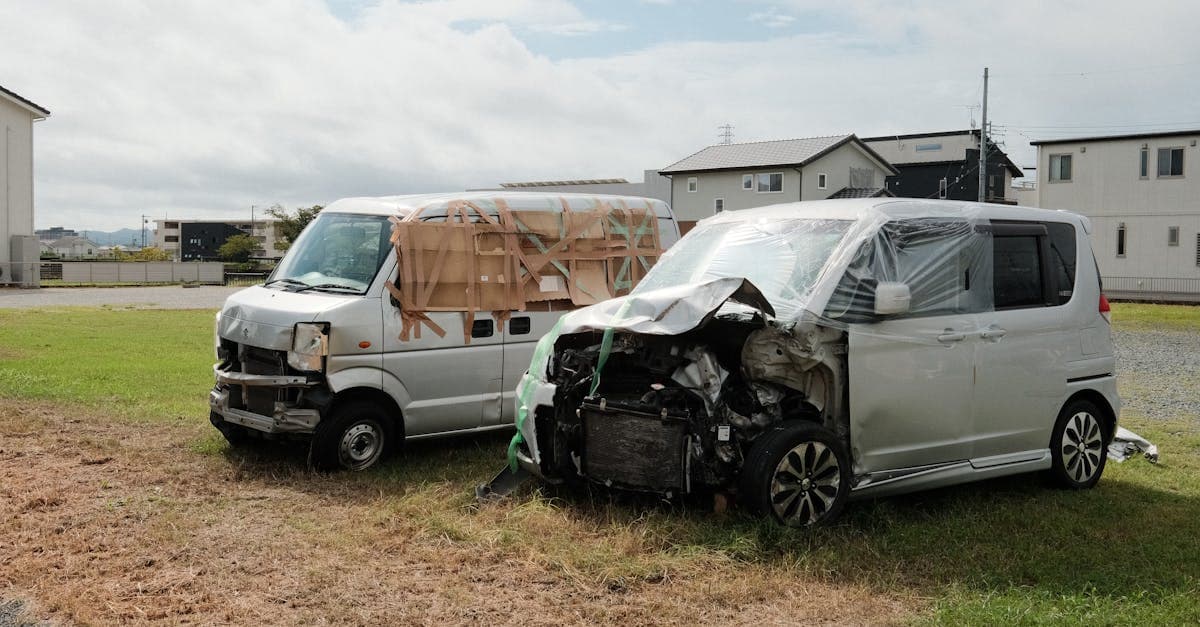
Can you answer these questions about your collision insurance? What is your current collision deductible? What is your vehicle's actual cash value today? If your vehicle were totaled tomorrow, would the collision payout cover your remaining loan balance? How much of your annual auto premium goes specifically toward collision coverage?
If you cannot answer most of these confidently, you are paying for coverage you do not fully understand — and that means you may be paying too much, carrying too little, or both.
Collision insurance is straightforward in concept: it pays to repair or replace your vehicle after an accident involving impact with another vehicle or object. But the details that determine whether collision coverage serves you well or poorly require attention.
Your deductible choice alone can mean hundreds of dollars in premium difference per year. Your vehicle's age and value determine whether collision coverage is cost-effective. The way you handle the claim process — which repair shop, whether to file, how to challenge a low valuation — directly affects your out-of-pocket outcome.
Most drivers set their collision coverage once and forget it for years, never questioning whether the original decision still makes sense. This guide changes that by walking you through every decision point, arming you with the knowledge to actively manage your collision coverage rather than passively accepting whatever defaults your insurer provides.
Collision Insurance for Electric and Hybrid Vehicles
Strategically, this matters because Electric and hybrid vehicles present unique collision insurance considerations due to their specialized components, higher repair costs, and evolving technology. Understanding these factors is understanding the recovery program that gets you back in the game after a collision for the future of driving.
Higher repair costs: Electric vehicles cost an average of 25 to 50 percent more to repair after a collision than comparable gas-powered vehicles. Specialized battery packs, electric drive components, aluminum body panels, and integrated sensor systems all contribute to higher parts and labor costs.
Battery damage concerns: The battery pack in an electric vehicle can cost $5,000 to $20,000 or more to replace. A collision that damages the battery pack can transform a moderate accident into a near-total-loss situation. Collision coverage is particularly important for EVs because this single component can represent a massive repair expense.
Specialized repair requirements: Not all body shops are equipped to repair electric vehicles safely. High-voltage battery systems require specialized training and equipment. Your insurer's preferred shop network may have limited EV-certified facilities, which can extend repair timelines.
Premium implications: Collision premiums for electric vehicles are typically 10 to 30 percent higher than for comparable gas-powered vehicles, reflecting the higher repair costs. As EV adoption grows and repair infrastructure develops, this premium gap is expected to narrow.
Tesla and other EV-specific insurance: Some manufacturers, notably Tesla, offer their own insurance products with collision coverage specifically priced for their vehicles. These products may offer more competitive rates than traditional insurers because the manufacturer has direct data on repair costs and vehicle safety performance.
Hybrid considerations: Hybrid vehicles fall between EVs and traditional vehicles in collision cost. They have both combustion and electric components, creating moderate cost increases over standard vehicles.
Understanding Your Collision Deductible
Strategically, this matters because Your collision deductible is the amount you pay out of pocket before insurance covers the remaining repair or replacement cost. It is the price of accessing the recovery program that gets you back in the game after a collision through your insurance policy.
Common deductible amounts range from $100 to $2,500, with $500 and $1,000 being the most popular choices. The right amount depends on your savings, your premium sensitivity, and how much out-of-pocket cost you can absorb comfortably after an accident.
How the deductible applies in practice: If your collision repair costs $6,000 and your deductible is $500, you pay $500 and the insurer pays $5,500. If repairs cost $400 and your deductible is $500, the insurer pays nothing — the entire cost falls below your deductible threshold.
Deductible and premium relationship: Higher deductibles produce lower premiums. Moving from a $250 deductible to a $500 deductible typically saves 15 to 20 percent on your collision premium. Moving from $500 to $1,000 saves an additional 10 to 15 percent. Each increase saves less incrementally because the insurer's risk reduction shrinks.
The break-even calculation matters. If raising your deductible from $500 to $1,000 saves you $150 per year, you break even after 3.3 years without a claim. Since the average driver goes seven to ten years between collision claims, the higher deductible saves money for most people over time.
Your deductible should match your emergency fund. If paying a $1,000 deductible would create financial hardship, stick with $500. The premium savings from a deductible you cannot actually afford are meaningless if an accident leaves you unable to cover the cost.
Understanding Actual Cash Value in Collision Claims
The smart move here is clear. Collision insurance pays up to your vehicle's actual cash value — not its original purchase price or replacement cost. Understanding how ACV works prevents disappointment when you file a claim.
What actual cash value means: ACV is your vehicle's fair market value immediately before the accident. It reflects the price a reasonable buyer would pay for your specific vehicle in its pre-accident condition, considering year, make, model, trim, mileage, condition, options, and local market factors.
How insurers calculate ACV: Most insurers use third-party valuation services that aggregate vehicle listing data, auction results, and dealer transactions. CCC Intelligent Solutions, Mitchell, and Kelley Blue Book are common sources. The valuation considers your vehicle's specific attributes — a low-mileage vehicle in excellent condition receives a higher valuation than a high-mileage vehicle with wear.
Depreciation is the key factor. New vehicles lose 20 to 30 percent of their value in the first year and continue depreciating roughly 15 percent annually after that. A vehicle purchased for $35,000 may have an ACV of $22,000 after three years. This gap between what you paid and what the insurer pays is the most common source of collision claim dissatisfaction.
Challenging an ACV determination: If you believe the insurer's valuation is too low, gather evidence. Search for comparable vehicles for sale in your area with similar year, make, model, mileage, and condition. Document any recent maintenance, new tires, or improvements that increase your vehicle's value. Present this evidence in writing and request a review.
Gap insurance addresses the ACV shortfall. If you owe more on your loan than your vehicle's ACV — common in the first two to three years of a loan — gap insurance covers the difference between the collision payout and your loan balance.
Weather-Related Accidents and Collision Coverage
Position yourself ahead of this. Bad weather causes accidents, but the collision that results from bad weather is still a collision. Understanding how weather-related accidents interact with your collision coverage prevents confusion at claim time.
The key distinction: If weather directly damages your vehicle — hail dents, flood damage, a tree falling on your parked car — that is a comprehensive claim. If weather causes you to lose control and collide with something — hydroplaning into a guardrail, sliding on ice into another car — that is a collision claim. The damage resulted from impact, even though weather was the underlying cause.
Ice and snow accidents are among the most common weather-related collision claims. Sliding through an intersection, skidding into a curb, or rear-ending a vehicle because of icy braking conditions are all collision events. Your collision coverage applies normally.
Hydroplaning accidents occur when your vehicle loses contact with wet road surface and collides with another vehicle or object. Despite the water being the root cause, the resulting impact makes it a collision claim.
Fog and low visibility collisions are covered under collision insurance. Reduced visibility does not change the coverage classification — if your vehicle hits something, collision coverage applies.
Wind-related crashes where wind pushes your vehicle into another vehicle or object are typically collision claims. However, wind damage itself — such as a windblown sign hitting your parked car — is comprehensive. The determining factor is whether your vehicle was in motion and struck something.
Seasonal claim patterns: Collision claims spike during winter months in northern states and during heavy rain seasons in southern states. Adjusting your driving habits during these periods reduces your collision claim risk.
Collision Insurance in No-Fault States
Strategically, this matters because No-fault insurance laws affect how medical bills and lost wages are handled after an accident, but collision coverage operates largely the same regardless of your state's fault system. Understanding the distinction prevents confusion.
What no-fault means: In no-fault states, each driver's own insurance pays for their medical expenses and lost wages after an accident, regardless of who caused it. This system is designed to reduce lawsuits by having each party's insurance respond first.
What no-fault does not affect: Collision coverage works identically in fault and no-fault states. You file a collision claim with your own insurer, pay your deductible, and the insurer covers repairs up to your vehicle's actual cash value. The no-fault system governs injury claims, not vehicle damage claims.
Property damage in no-fault states: Despite the name, property damage liability still follows traditional fault-based rules in most no-fault states. If another driver damages your vehicle, their property damage liability insurance pays — or you can use your own collision coverage and let your insurer subrogate.
The twelve no-fault states are Florida, Hawaii, Kansas, Kentucky, Massachusetts, Michigan, Minnesota, New Jersey, New York, North Dakota, Pennsylvania, and Utah. If you live in one of these states, understand that no-fault applies to personal injury protection, not to collision coverage.
Choice states: Kentucky, New Jersey, and Pennsylvania offer drivers a choice between no-fault and traditional tort coverage for injury claims. This choice does not affect collision coverage — it remains the same regardless of which injury system you select.
Practical impact on collision claims: The main practical difference in no-fault states is that fault determination may receive less emphasis, which can slow subrogation efforts. Your insurer may take longer to recover your deductible through subrogation if fault is not clearly established.
What Collision Insurance Actually Covers
Strategically, this matters because Collision insurance is the protective gear that absorbs the hit so your finances do not. It specifically covers damage to your own vehicle resulting from impact with another vehicle or object. The scope is clearly defined and includes several common accident scenarios.
Vehicle-to-vehicle collisions are the most obvious covered event. Whether you rear-end another car, are hit at an intersection, or are sideswiped on the highway, collision coverage pays for your vehicle's repairs regardless of who is at fault. This applies to accidents with cars, trucks, motorcycles, and any other motor vehicle.
Single-vehicle accidents are equally covered. Hitting a guardrail, telephone pole, tree, curb, or any stationary object triggers collision coverage. Driving into a ditch, rolling your vehicle, or running off the road also qualifies. The key element is impact — your vehicle struck something.
Pothole and road debris damage that results from a collision event is covered. If you hit a pothole that damages your suspension or rim, collision coverage applies because your vehicle impacted an object. Similarly, striking debris on the roadway is a collision event.
Parking lot incidents including backing into posts, being hit by another vehicle while parked, and door-opening damage caused by your vehicle's motion fall under collision coverage. Parking lot claims are among the most frequently filed collision claims in the United States.
The common thread across all covered events is physical impact between your vehicle and another object or surface. If the damage results from something other than impact — such as theft, vandalism, fire, or weather — it falls under comprehensive coverage instead.
The Strategic Approach to Collision Insurance
Collision coverage is not a set-it-and-forget-it decision. It is a financial strategy that should evolve with your vehicle, your finances, and your life circumstances. The smartest drivers treat collision insurance as the protective gear that absorbs the hit so your finances do not — a dynamic tool that requires periodic adjustment.
The strategic framework is simple. For new and financed vehicles, carry collision with a deductible you can afford from savings — typically $500 to $1,000. As your vehicle ages and depreciates, gradually increase your deductible to reduce premiums. When the annual premium exceeds 10 percent of vehicle value and you can afford to self-insure, consider dropping collision entirely.
Throughout this lifecycle, monitor your premium against your vehicle's actual cash value. Shop rates every two to three years. Take advantage of safety feature discounts, good driver discounts, and bundling savings. And always maintain an emergency fund that can cover your deductible — because the best collision coverage in the world does no good if you cannot afford to file a claim.
Collision insurance exists to transfer the risk of vehicle damage from you to an insurer. Managing that transfer intelligently — knowing when to carry it, how much to pay for it, and when to let it go — is a cornerstone of smart auto insurance management.
Continue reading

How Deductible Choices Affect Your Insurance Quote Comparison
Changing your deductible dramatically changes your premium — but it also changes your out-of-pocket risk. Understanding this tradeoff across multiple quotes reveals which deductible level offers the best balance.

The Post-Claim Policy Checkup: What to Review After Filing a Claim
After filing an insurance claim, review your coverage to ensure your limits are still adequate, your deductible still makes sense, and any coverage gaps revealed by the claim are addressed.

Assignment of Benefits and Roof Repair Claims After a Storm
Storm chasers and roofing contractors often present AOBs to homeowners after hurricanes and hail storms. Understanding the risks of signing helps you protect your claim and your roof.